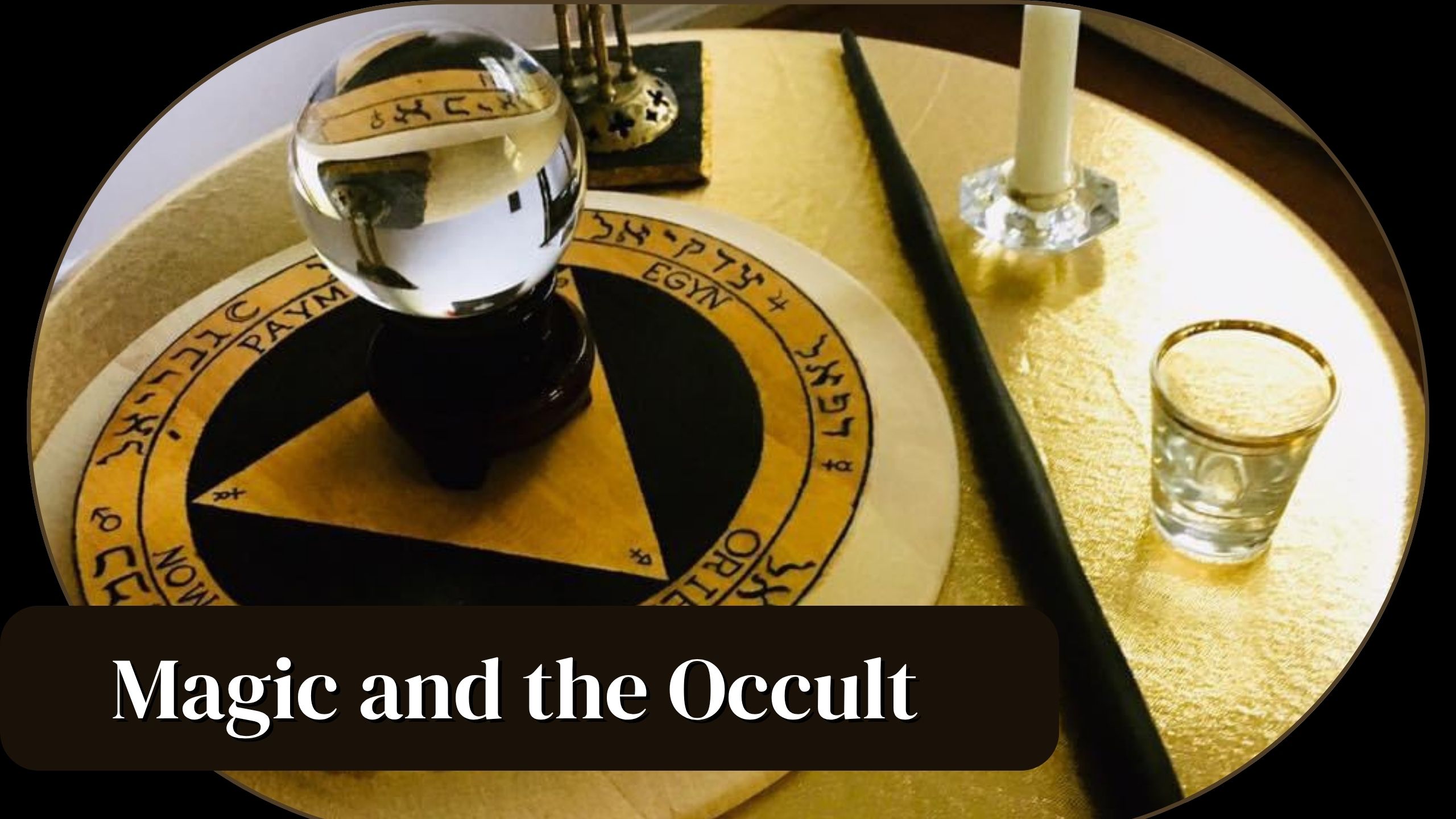
Here at Practical Occult we like to make distinctions when discussing topics like magic and the occult so people can more easily find what they seek. The occult refers to a broad umbrella of topics beyond the mundane, including everything from the supernatural or paranormal to mysticism and astrology. The study of the occult supports the practice of operative sorcery, or magic, by providing theories to inform spellwork.
It’s very easy to find information about magic and spellwork on the internet. Certain practices even go viral and become trends. However the easiest information to access often excludes the occult information that is required to get the desired results.
There’s a little phrase I like to remember from an old nursery rhyme book I read as a child: If wishes were horses, beggars would ride.
The same is true for spellwork. If you could ensure prosperity by simply blowing cinnamon across your threshold at the start of every month, everyone would do it and together we’d end poverty. (If you’d like to learn how to magically “wake up” your materia, read this.)
While we can easily observe the outward actions of a spell, other aspects that lend power to the spell are not so easily observed- techniques of mind and soul, communication and relationships with the Unseen, sympathies between materials and other forces, and much more.
The occult is full of theories about these hidden forces, their natures, and how they can be accessed. When you are dealing with the unseen, it can be tricky to figure out what is going on. In the marketplace of ideas, it’s hard to know who is speaking from experience and who is just spouting ideas they repeated from somewhere else, sometimes even fiction. Even among the experienced, many folks have always done things a certain way and really shouldn’t speak about things they haven’t tried without disclosing that they haven’t tried them. This also holds true for authors of the past.
There’s a great quote from an academic paper that highlights the difference between occult philosophers and magicians:
“Philosophers meditated and theorized on the secret effects of nature, but the magicians experimented instead and sought to gain certain ends and sympathies with natural powers by seeking out and eliciting their occult design, a responsibility now given to the natural sciences.”
-Dmitri A. Borgmann
The operative word here is “experimented.” Without experimentation, occult theories are….just theories. Like opinions, anyone can have a theory, and while some are more plausible than others, who can really know unless it’s tested?
At Practical Occult, we focus on tested techniques that have worked for us, and encourage you to do your own experimentation. While there may be an infinite number of variables that go into magic and operative sorcery, one of the most important factors will always be you, the practitioner.
I know it can be hard for some folks to figure out where to start on their magical journey, and for others who have been on the path longer how to close the gap between what they already know and the results they want to see in their life. I hope we at Practical Occult can make your journey a little easier. You can browse the free resources, take a class, book a consultation, or pick up a treasure from the store. We’re happy to help.
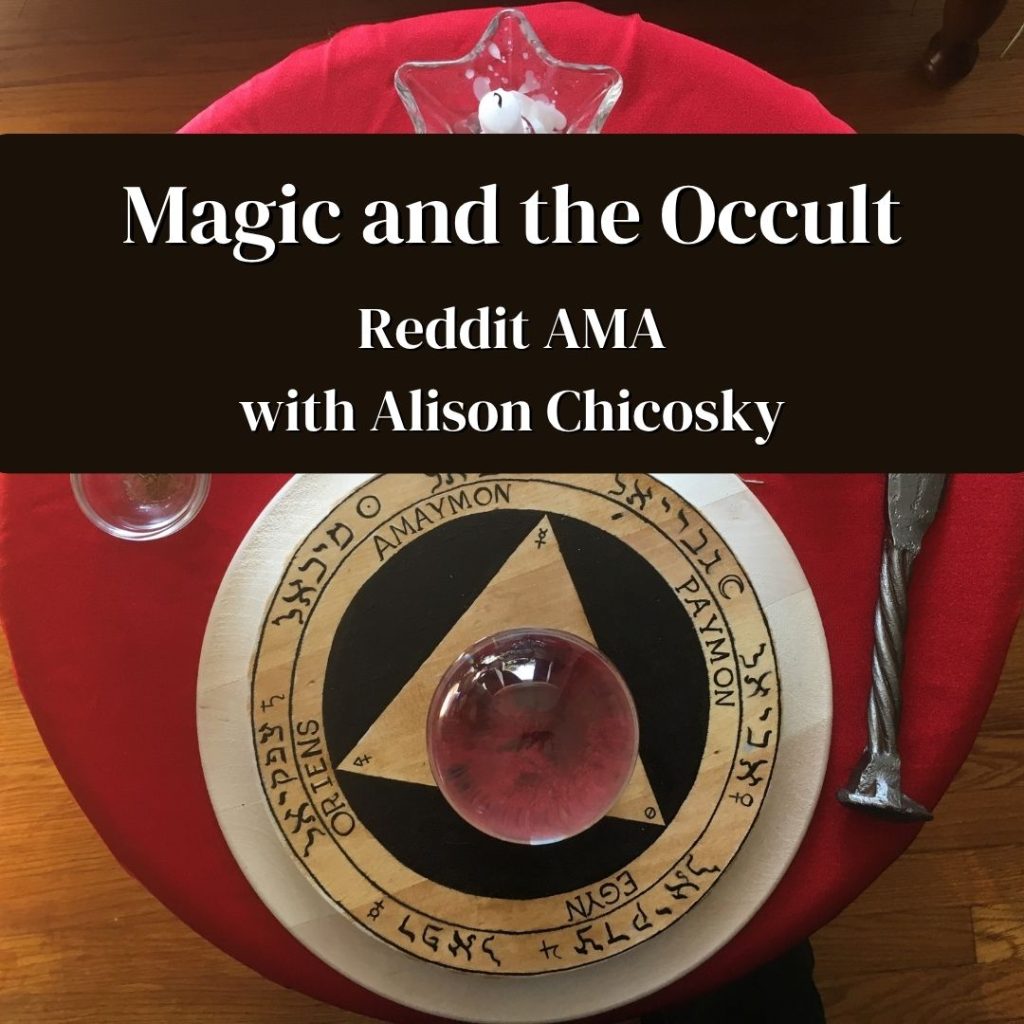
Come participate in Alison Chicosky’s AMA on Reddit’s r/occult forum: https://www.reddit.com/r/occult/
Author: Alison Chicosky
Alison Chicosky is a scholar and practitioner of a variety of forms of thaumaturgy with a focus on results-based magic. While especially interested in both Solomonic magic and the Graeco-Egyptian magic of the Greek Magical Papyri, she is also well versed in soul-flight and psychic magic of various kinds. The founder and force behind Practical Occult (www.practicaloccult.com), she strives to provide pentacles and other enchanted items drawn from a broad background of rigorously studied ancient arts, leveraging the systems of the past for practical modern use.